
Bailey County Court Records After Arrest
The Bailey County arrest-to-court path starts with the jail and moves through several offices. The jail handles custody and booking. A magistrate handles warnings and bond under Texas Code of Criminal Procedure Article 15.17. Prosecutors decide what formal charges to file. Felony matters and serious criminal proceedings may move through the district-court system. County-level misdemeanors may involve county court and the County Attorney. Justice of the Peace matters use a separate JP route.
That split matters because court records after a jail arrest are not the same thing as a jail roster entry. A roster or VINELink search can help confirm custody, while the court record shows filed charges, case numbers, settings, dispositions, bond actions, and later outcomes. For custody or booking details, use Bailey County jail inmate records. For booking photos, use the Bailey County jail mugshots page. For filed charges and case status, follow the clerk and prosecutor route.
Find Bailey County Court Records After Arrest
The County Clerk page links a vendor-hosted LGS Online Solutions records purchase portal. The county wording says "Purchase online records," so it should not be described as a free public criminal case search. The County Attorney page also links an LGS e-discovery portal, which appears to be for authorized e-discovery use rather than general public lookup. If online access does not show the needed case, the correct clerk or court office remains the records path.
- Confirm the arrest and custody status through VINELink, the sheriff, or jail staff.
- Ask whether a case number, magistrate court, bond court, or filing court has been assigned.
- For felony or district matters, contact the District Clerk and District Attorney.
- For county-level misdemeanor or County Court matters, contact the County Clerk or County Attorney as appropriate.
- For JP citations, warrants, or low-level matters, contact the Justice of the Peace office.
- Use the LGS portal for online records the county makes available, while expecting purchase or payment steps.
The LGS Online Solutions record-purchase portal is the online records path linked by the Bailey County Clerk.
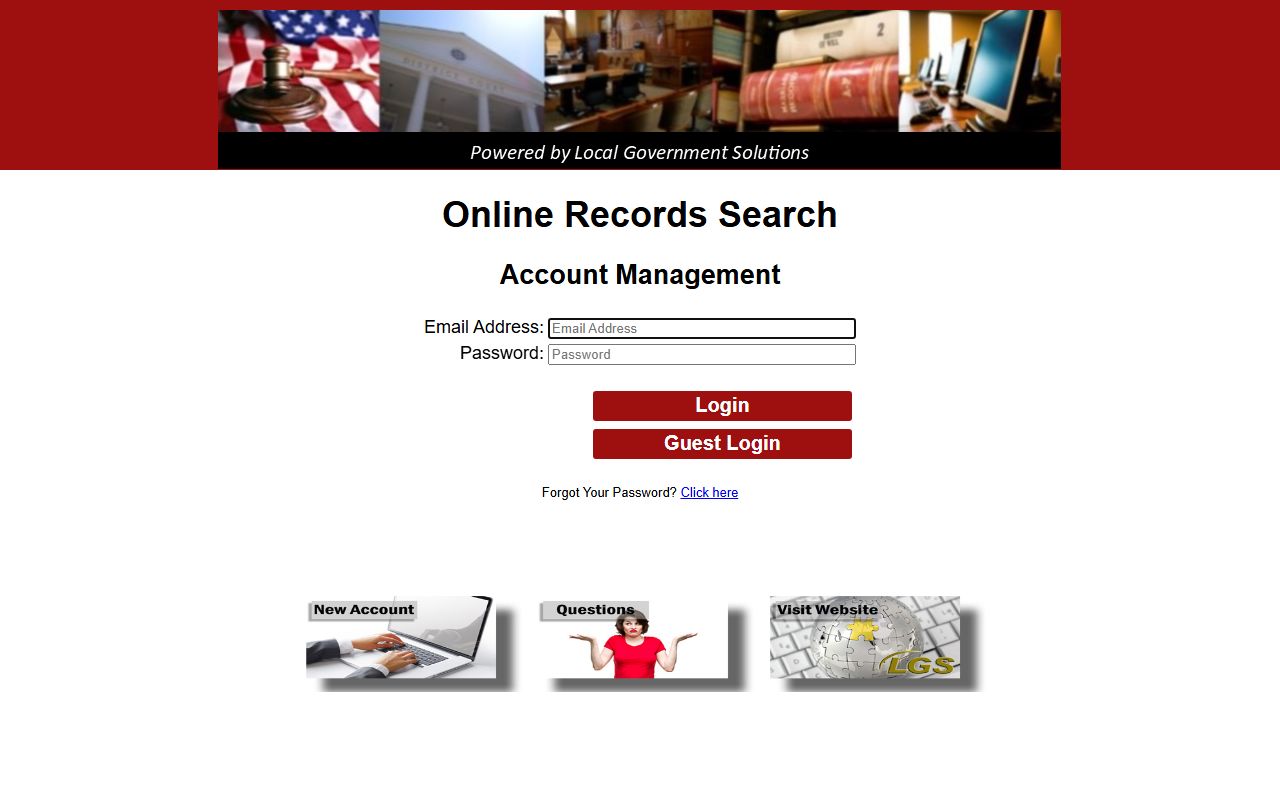
Because the portal is vendor-hosted and dynamic, verify the available record type before relying on it for a criminal case search.
Bailey County Court Records Offices
Several Bailey County offices may be involved after a jail arrest. The 287th Judicial District Court page names Judge Kathryn Gurley. The District Clerk page names Lupita Pineda at the courthouse. The County Clerk page names Irene Espinoza and lists official public records, probate, civil, criminal collections of fines and fees, and online record-purchase links. The District Attorney page names Jackie R. Claborn II, and the County Attorney page names Michaela Kee. Justice of the Peace Rodney Baker is listed separately for JP matters.
District Clerk
300 South 1st Street, Suite #130
Muleshoe, TX 79347
806-272-3165
County Clerk
300 South 1st Street, Suite #200
Muleshoe, TX 79347
806-272-3044
District Attorney / County Attorney
623 W American Blvd
Muleshoe, TX 79347
806-272-4205
Justice of the Peace
306 West 2nd Street
Muleshoe, TX 79347
806-272-4300
Charges Filed After Bailey County Arrest
After a Bailey County jail arrest, the booking label is only the starting point. A prosecutor may file a complaint, information, or indictment depending on the charge, court, and case stage. A complaint can begin a criminal accusation. An information is a prosecutor-filed charging document often used in Texas when indictment is not required or has been waived. An indictment is a grand-jury charging instrument, usually associated with felony cases. The filed document is part of the court record after the arrest.
| Document | Who Files or Returns It | What It Means |
|---|---|---|
| Complaint | Officer or prosecutor | Starts or supports a criminal accusation and probable-cause path. |
| Information | Prosecutor | Formal prosecutor-filed charge, often used where indictment is not required or has been waived. |
| Indictment | Grand jury | Formal felony charging instrument returned after grand-jury action. |
Bailey County Charge Status
Charge status can change after arrest. A jail record may list the arrest reason or hold that brought the person into custody, while the prosecutor may file different, amended, reduced, enhanced, or dismissed charges later. A case can also carry more than one charge, each with its own status. This is why court records after a jail arrest should be checked directly with the proper clerk when the question is about a filed case, pending status, or disposition.
| Status | Meaning |
|---|---|
| Pending | No final disposition has been entered for that charge. |
| Filed | The prosecutor or court has opened formal charge paperwork. |
| Amended | The wording, statute, degree, or class has changed. |
| Reduced | A lesser charge replaces or resolves a higher charge. |
| Dismissed | The court or prosecutor ended that charge without conviction. |
| Indicted | A grand jury returned a felony charging instrument. |
| Disposition | The final outcome of that charge or case. |
Bond After Bailey County Arrest
Bond fits between the jail record and the court record. After arrest and booking, the magistrate warnings and bond process happen under Texas criminal procedure. Bailey County does not publish a local bond desk page, accepted payment method list, online jail bond portal, or bond fee schedule. Family members should confirm the current posting procedure with the sheriff, jail, or the court that set bond. A posted bond on one charge also may not release the person if another warrant, detainer, federal hold, ICE detainer, parole hold, or no-bond order remains active.
| Bond Type | Plain Meaning | Local Caution |
|---|---|---|
| Cash bond | Full bond amount is paid as allowed locally. | Bailey County payment methods were not published. |
| Surety bond | A licensed bail bond company posts bond for a fee. | Confirm current jail or court posting instructions. |
| PR bond | Release on promise to appear and follow conditions. | Set by magistrate or court, not by jail staff alone. |
| No-bond hold | Release is unavailable until further court or agency action. | May involve another warrant, detainer, or court order. |
Warrants and Bailey County Arrest Records
No official Bailey County sheriff active-warrant search or most-wanted list was located, and no Muleshoe Police public warrant search was found on the official city police page. That does not mean no warrants exist. It means the reviewed official sources do not provide an online warrant lookup. For local sheriff warrant or custody routing, call the Bailey County Sheriff's Office. For JP or citation matters, use the Justice of the Peace office. For court-issued bench warrants tied to filed cases, contact the clerk of the court where the case is pending.
- Arrest warrant
- Judicial authorization to arrest a person for a criminal accusation.
- Bench warrant or capias
- A court-issued warrant, often tied to failure to appear or court-order violations.
- Search warrant
- Authority to search a place or property, not proof that a person is in custody.
- Fugitive hold
- A custody interest from another jurisdiction.
Charges vs Convictions
A charge is an accusation. A conviction is a final case result through plea, verdict, or other disposition that legally establishes guilt. Court records after a jail arrest may show charges long before there is a conviction. Public users should not treat an arrest or charge as a conviction. The distinction is especially important when reviewing background information, bond status, employment-sensitive questions, or any record that may later be dismissed, reduced, or expunged.
| Point | Charge | Conviction |
|---|---|---|
| Stage | Accusation after arrest or filing | Final outcome after plea, verdict, or disposition |
| Proof | Based on probable cause or prosecutor filing | Requires plea or proof beyond a reasonable doubt |
| Can change | May be amended, reduced, or dismissed | May have appeal, sentence, or later record-clearing issues |
Sealed vs Expunged Records
Texas uses expunction under Code of Criminal Procedure Chapter 55 for eligible arrest and case records. The research file did not identify a Bailey County local expunction instruction page. A dismissal does not automatically erase every public or private copy of an arrest record. A court order is the legal route for qualifying records. Sealing and expunction also differ from a private website removal request or a business correction process.
| Issue | Sealed | Expunged |
|---|---|---|
| Public access | Hidden from most public access | Removed or treated as not existing under the order |
| Agency records | May remain available to limited users | Must be handled under the expunction order |
| Best use | Restricted disclosure where the law allows | Eligible arrests or cases under Chapter 55 |
Public Access Limits After Arrest
The Texas Public Information Act, Government Code Chapter 552, provides the general access framework for Texas governmental records, but exceptions and confidentiality rules can limit release. Juvenile records, sealed records, expunction orders, active law-enforcement matters, certain victim or witness information, medical information, and sensitive identifiers may be withheld or redacted. A public information request should name the person, date of birth if known, arrest date, case number if known, and the specific record sought.
Important: Do not use court records after a Bailey County arrest for FCRA-covered employment, credit, tenant, or insurance decisions.
The Bailey County District Clerk page is one official contact source for district case records after a jail arrest.
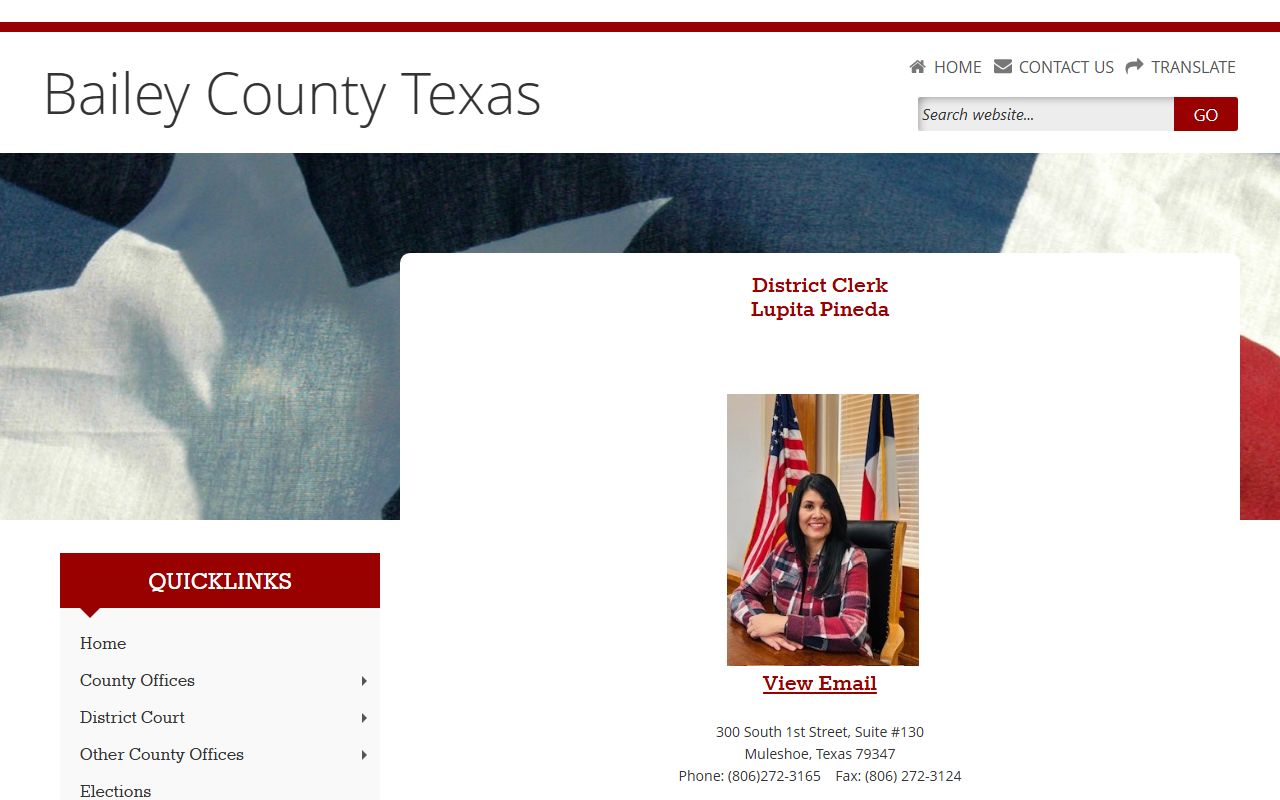
For county-level criminal collections and official public records, the County Clerk page is a separate office and should not be confused with the District Clerk.